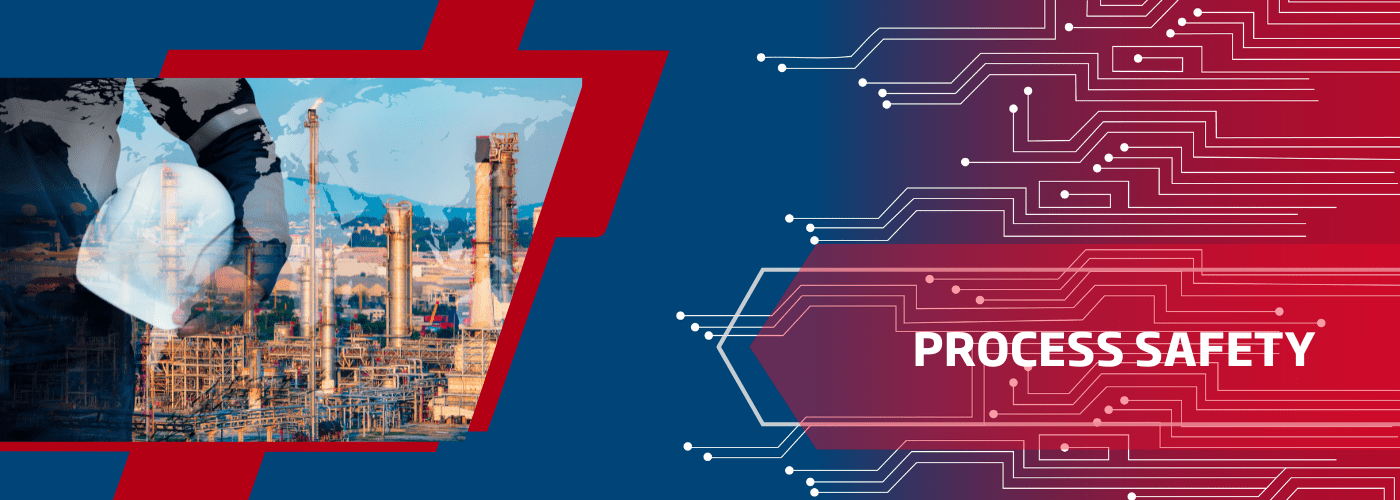
Certified Process Safety Professional (CPSP) Training Course
CCPS PSM Certification is the definitive stamp of approval in Risk Based Process Safety.
Certified Process Safety Professional (CPSP)
CCPS PSM Certification is the definitive stamp of approval in Risk Based Process Safety.
Overview
Focus: This course prepares participants for the CCPS Process Safety Professional (CCPS®) certification exam and supports annual renewal through continuing education.
The CCPS® is a rigorous credential verifying competency in the latest process safety tools and techniques. It demonstrates expertise, requires relevant experience, and ensures ongoing proficiency—essential for every process safety professional.
CCPSC - The CCPS Process Safety Professional Certification designation signifies more than just training. This credential demonstrates expertise in process safety practice.
Only process safety professionals with relevant process safety experience can earn this distinction. Each candidate will be rigorously screened and tested to ensure their professional knowledge and commitment to staying current with the latest developments in process safety.
The CCPSC is the authoritative process safety credential. Take the first step toward establishing yourself as a recognized expert in process safety: start the certification process today.
This intensive 5-day Exam preparation course merges PSM fundamentals, RBPS pillars, advanced risk techniques, and exam-focused reviews. It covers key CCPS RBPS 20 elements, LOPA, consequence/dispersion modeling, and practical exercises. Based on CCPS guidelines, AIChE LOPA book, and Chemical Process Safety (Daniel A. Crowl). Includes lectures, videos, group discussions, case studies, workshops, exercises, and exam-style questions to build exam readiness.
Course Objective:
By the end of this course, participants should be able to:
Get prepared for the next CCPS-CPSP exam and have enough knowledge and skills to pass such an exam to get the Certified Process Safety Professional (CPSP) certification from the Center for Chemical Process Safety (CCPS)
Discuss the four pillars and 20 elements of risk-based process safety (RBPS) and the importance of process safety.
Develop a process safety culture, leadership commitment, employee engagement and empowerment, and a safety-oriented culture
Understand the key attributes of a Process Safety Professional.
Understand the Process Safety Professional competency requirement for the hazardous industry.
Demonstrate an understanding of the Risk-Based Process Safety framework of CCPS in complying with safety laws.
Identify and assess process safety hazards, including physical, chemical, biological, ergonomic, and psychosocial hazards.
Apply risk assessment methodologies to prioritize and mitigate process safety risks effectively.
Develop strategies to control and minimize exposure to these hazards as per RBPS element model.
Demonstrate an understanding of RBPS elements in conducting process safety audits & incident investigations, and determine the affected element.
Demonstrate an understanding of interdependency & boundary of RBPS element.
Activity & Materials Provided
Activities
Classroom delivery with theoretical lectures and practical implementation.
Videos (e.g., CSB, DuPont, EI, Buncefield, Challenger).
Brainstorming, group discussions, Q&A.
Case studies, accident analysis, role play, jigsaw exercises.
Workshops: PHAs, Bowtie/SCE, QRA/ALARP, RCA (FTA).
Group exercises: P&ID/PFD/C&E reading, barrier verification, and incident investigation.
Note:
Every day Mock examination (MCQ + descriptive) based on CCPS examination structure.
Off the training work on some topic every day.
Open book topic or Other courses to attend:
Chemical Safety.
Relief system.
Ventilation system
Dust explosion.
Quantitative Risk Analysis.
Basic overview of the damage mechanism and the inspection technique.
Safety integrity level.
Purging process.
Certificate
A certificate will be issued upon successful completion of training & Passing the Post Assessment Exam.
Who Should Attend
This course is appropriate for a wide range of professionals, but not limited to:
Process Safety Professionals
Process Safety Engineers / Consultants.
Process Safety Coordinators and Managers
HSE Engineer / Consultant / Manager.
Operations & Maintenance Supervisors / Engineers / Managers
Facilities Engineers / Managers
Chemical Manufacturing and Hazardous Material Industrial Safety Professionals
Oil and Gas Safety Professionals.
Prerequisite for CCPS Certification exam :
Industrial experience
5 years of experience with a degree (4-year/bachelor's or equivalent) from an accredited college or university in science, technology, engineering, or math (STEM), or
10 years of experience for a degree in a non-STEM field or no degree
Have application skills of the Process Safety Management system.
Have basic knowledge of process safety engineering, like relief system, ventilation etc.
Course Methodology
The BK Management Team believes that learning is not only about acquiring technical skills, it is also about learning behaviors & Competencies that are desirable for work in plant operation & maintenance, critical dimensions. Our holistic teaching develops our delegates' personal effectiveness to function both as individuals and as team players.
The course delivery & modes of instruction will incorporate Hands-on Practical Sessions using equipment, State-of-the-Art Simulators (as required), Drawings, Case Studies, Videos, Exercises, Theory, Practical skills, and Q&A sessions.
To enhance learning outcomes, theory sessions will comprise classroom-based lectures that will be interspersed with interactive discussions, scenario-based, case-study, group exercises, video clips, PowerPoint slides, learners' Guide, and the application of various tools which will be provided to help the delegates and participants of the learning objectives. With the successful implementation of the learnt skills, they are bound to enhance Individual & Organizational growth.
For online / Interactive Virtual sessions, the Delegate should have a stable & good Internet connection on their Laptop.
Course Outline
PSM Fundamentals
Incident Anatomy (Challenger)
Process Safety Culture
Compliance with Standards
Process Safety Competency
Workforce Involvement
Stakeholder Outreach
Activities
Challenger Video
Group Exercise: Culture Self-Assessment
Exam Questions
Process Knowledge Management
Hazard Identification & Risk Analysis (HIRA)
HAZID (ISO 17776)
HAZOP Guidewords
P&ID / PFD / C&E Reading
Risk Ranking
Bowtie & Barriers (IOGP 544)
Activities
P&ID Exercise
Bowtie Construction
HAZOP / LOPA Scenario
Operating Procedures
Safe Work Practices (PTW, LSR, Isolation)
Asset Integrity & Reliability
Contractor Management
Training & Performance Assurance
Management of Change
Operational Readiness (PSSR)
Conduct of Operations
Emergency Management
Activities :
MOC Case Study
PTW Role Play
Incident Investigation
Measurement & Metrics
Auditing
Management Review & Continuous Improvement
Daniel Crowl – Technical Safety (Part 1):
Pressure Relief Systems
Relief Sizing (API 520/521)
Flare & Vent Headers
Overpressure Scenarios
Activities:
RCA Workshop (FTA)
Metrics Dashboard
Audit Checklist Exercise
Management Review Simulation
Relief Sizing Calculations
Flare Radiation Exercise
Exam Questions
Daniel Crowl – Technical Safety (Part 2):
Consequence Modeling (Fire, Explosion, BLEVE)
Vapor Cloud Explosion (TNO, Baker-Strehlow)
Toxic Dispersion (Gaussian, Dense Gas)
Pool Fire & Jet Fire
QRA & ALARP Framework.
Activity:
Dispersion Modeling (ALOHA Demo)
VCE Calculation
Toxic Plume Exercise
QRA Case
CCPS Examination Preparation
Overview of the CPSP examination format and content
Multiple Practice exams and sample questions
Study techniques and resources
Test-taking strategies and time management
Comprehensive review of course materials
Mock CPSP examination to simulate real testing conditions
Do you have any questions ?
Jubail Industrial City, Saudi Arabia
373 road 112, First Industrial Area, Unit No.: 1 Al Jubail 35717 - 7043 KSA
Explore
About
© 2026 BK Consultancy & Training
All rights reserved.
Jubail Industrial City, Saudi Arabia
373 road 112, First Industrial Area, Unit No.: 1 Al Jubail 35717 - 7043 KSA
© 2026 BK Consultancy & Training
All rights reserved.